
Asiana Airlines safety record
No Asiana Airlines flight has had a fatal accident for anyone on board since 2013 — more than thirteen years. On airlines like Asiana, the chance of being in a fatal accident is about 1 in 80 million per flight.
No fatal accident for anyone on board since 2013
OZFlying Asiana Airlines? Know before you board.
- ✓Which aircraft is on your flight — the exact type and its record, updated if the airline swaps it
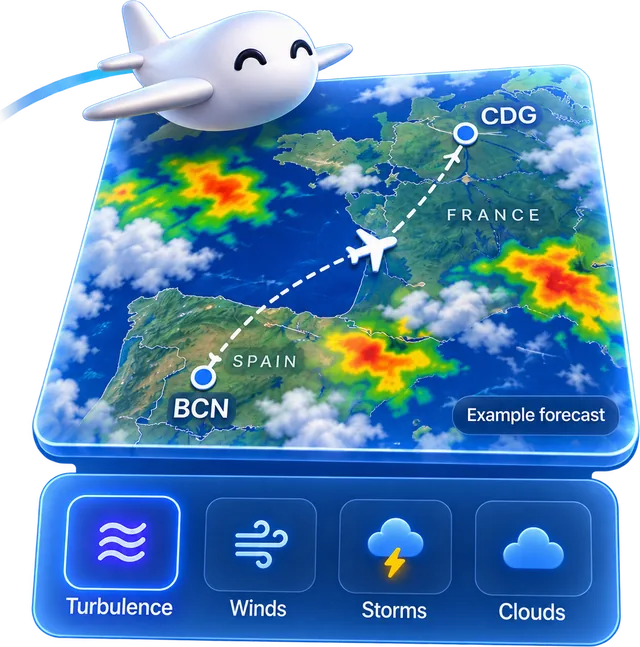
- ✓The turbulence forecast for your exact flight, refreshed as new weather comes in
- ✓Delays and gate changes on your Lock Screen, before the departure board
- ✓Where you are in the flight, and how long until the bumpy stretch is behind you
No fatal accident for anyone on board since 2013
Asiana's last fatal accident was flight 214 in July 2013, a 777 from Seoul that came in too low and too slow on a visual approach to San Francisco and hit the seawall short of the runway. Three of the 291 passengers lost their lives; the other 304 people on board survived. The US investigators found the crew mismanaged the descent, the pilot flying unintentionally switched off the automatic speed control, and the go-around came too late. They named the complexity of the autoflight system, and how it was explained in Boeing's manuals and Asiana's training, as contributing, and asked Asiana for stricter cockpit call-outs, more hand-flying practice and better preparation of new instructor pilots.
Two fatal accidents came before that. In July 1993 flight 733, a 737, hit a hillside near Mokpo on its third attempt to land in bad weather, at an airport with no precision approach; 68 of the 116 people on board lost their lives. In July 2011 a fire broke out on cargo flight 991, a 747 freighter from Incheon to Shanghai, and it came down in the sea off Jeju; its two pilots, the only people on board, lost their lives. Korea's investigators found the fire began on or near pallets carrying dangerous goods, among them lithium-ion batteries, but could not find what set it off.
Two later events were not fatal. In April 2015 flight 162, an A320, came in too low at Hiroshima, hit a landing-aid antenna array short of the runway and veered off the side of it; 28 people were slightly hurt. Japan's investigators found the captain kept descending without the runway in sight and the first officer did not call a go-around. In May 2023 a passenger opened an emergency exit on an A321 on approach to Daegu; the aircraft landed normally, a dozen people were slightly hurt, and Asiana stopped selling some exit-row seats.
Asiana was founded in 1988 as South Korea's second full-service airline. Korean Air took control of it in December 2024, and Asiana is due to merge into Korean Air on 17 December 2026, when its flights take Korean Air's name and it leaves Star Alliance. Until then its record is counted on its own. Air Busan and Air Seoul, its low-cost affiliates, fly under their own names and are not counted here; no one lost their life when an Air Busan A321 caught fire before take-off at Busan in January 2025.
Every fatal accident, on one line
Solid dots are its own flights; hollow ones were flown by a partner or subsidiary under its name; grey rings are hijackings and attacks. Fatalities that investigators don't class as accidents (such as trespassers) aren't shown.
Each of these was investigated, and the lessons are built into how every airline flies today. The full list is here if you want it.
Read the full list (3)
- Jul 2013 OZ214 · Boeing 777-200ER · San Francisco International AirportCame in too low and too slow on a visual approach and hit the seawall short of the runway. Three of the 291 passengers lost their lives; 304 of the 307 on board survived. The NTSB found the crew mismanaged the descent, the pilot flying unintentionally switched off automatic speed control, and the go-around came too late; the complexity of the autoflight system and Asiana's training contributed.
- Jul 2011 OZ991 (cargo) · Boeing 747-400 freighter · East China Sea, west of JejuA fire broke out in the main cargo deck on the way from Incheon to Shanghai and the aircraft came down in the sea; both pilots, the only people on board, lost their lives. Korea's investigators (ARAIB, 2015) found the fire started on or near pallets carrying dangerous goods, including lithium-ion batteries and flammable liquids, but could not determine what set it off.
- Jul 1993 OZ733 · Boeing 737-500 · Mount Ungeo, near Mokpo, South KoreaOn a third attempt to land at Mokpo in rain and low cloud, at an airport with no precision approach, the aircraft was flown below the minimum safe height and hit a hillside about 10 km from the runway. 68 of the 116 on board lost their lives; 48 survived.
Flying Asiana Airlines soon? See the bumps on your route
Enter where you're flying from and to. The forecast shows where the bumpy stretches are, how strong they'll be and when in the flight they come, from global weather forecasts and live pilot reports.
The day you fly, in the departure airport's own calendar.
Asiana Airlines in numbers
What Asiana Airlines flies
Tap a plane for its own safety record.
Asiana Airlines flights, with their turbulence forecast
Open a flight for the forecast on its next departure.
Asiana Airlines safety questions
How safe is Asiana Airlines?
No Asiana Airlines flight has had a fatal accident for anyone on board since 2013 — more than thirteen years. On airlines like Asiana, the chance of being in a fatal accident is about 1 in 80 million per flight. Every fact on this page is sourced — the list is at the bottom.
What is Asiana Airlines' safety rating?
There is no single official safety rating for airlines; the scores some websites publish are their own formulas. What can be checked is the record: no fatal accident for anyone on board an Asiana flight since 2013, with the events before that set out on this page. It is a member of IATA, the airlines' trade body, which requires its members to pass IATA's operational safety audit (IOSA).
What happened on Asiana flight 214?
In July 2013 the 777 from Seoul came in too low and too slow on a visual approach to San Francisco and hit the seawall short of the runway. Three of the 291 passengers lost their lives and 304 of the 307 people on board survived. The US investigators found the crew mismanaged the descent and switched off the automatic speed control without meaning to, and named the complexity of the autoflight system and Asiana's training as contributing causes.
Where these facts come from
Every fact on this page comes from official accident reports, the airline's own figures or the published accident record.
- Wikipedia founding, hubs, fleet
- One Mile at a Time merger into Korean Air on 17 Dec 2026
- Wikipedia Flight 733 (no official report online)
- Korea ARAIB Flight 991 final report (AAR1105)
- NTSB Flight 214 final report (AAR-14/01)
- Japan Transport Safety Board Flight 162 at Hiroshima, 2015
- Outlook India (AFP) Emergency exit opened near Daegu, 2023
- Wikipedia Air Busan 391 fire, 2025
- IATA IOSA registry IOSA registration (NOT yet read — Cloudflare; check in a browser)
- MIT News / Journal of Air Transport Management (Barnett, 2024) risk per flight 2018–2022
Flying Asiana Airlines soon?
FlyBud shows the exact aircraft on your flight and the turbulence forecast for your route.