
Air Canada safety record
No Air Canada mainline flight has had a fatal accident for a passenger or crew member since 1983 — more than forty years. In March 2026 two pilots lost their lives at New York LaGuardia on an Air Canada Express flight flown by its regional partner Jazz. On airlines like Air Canada, the chance of being in a fatal accident is about 1 in 80 million per flight.
No fatal accident for anyone on board since 1983
ACFlying Air Canada? Know before you board.
- ✓Which aircraft is on your flight — the exact type and its record, updated if the airline swaps it
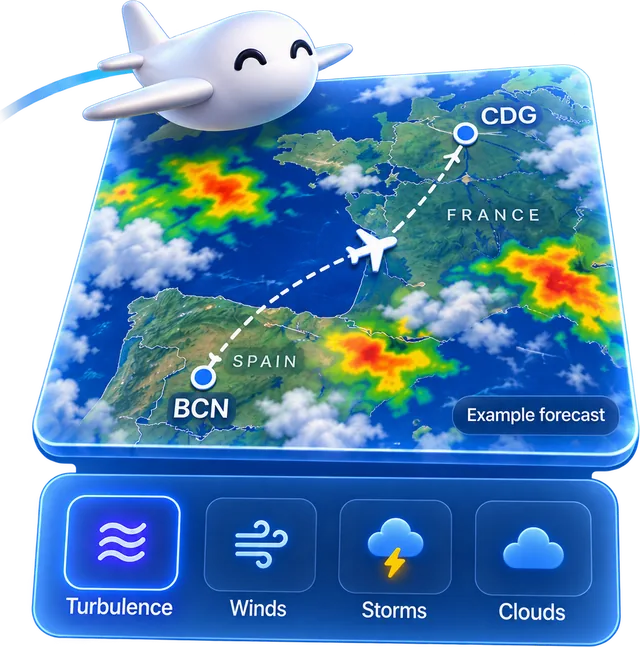
- ✓The turbulence forecast for your exact flight, refreshed as new weather comes in
- ✓Delays and gate changes on your Lock Screen, before the departure board
- ✓Where you are in the flight, and how long until the bumpy stretch is behind you
More than forty years without a fatal accident for passengers or crew on its own flights
Air Canada's last fatal accident on its own flights was on 2 June 1983, when flight 797 from Dallas to Toronto had a fire in a rear lavatory. The crew made an emergency landing at Cincinnati, but the fire flashed through the cabin as the doors were opened, and 23 of the 41 passengers lost their lives; all five crew got out. The NTSB could not find where the fire began and cited the time taken to judge how serious it was. Smoke detectors in aircraft lavatories and lighting along the cabin floor to guide people to the exits became required in the years after.
Two later accidents ended without loss of life. In March 2015 flight 624 struck the ground short of the runway at Halifax in a snowstorm; all 138 people on board got out, and 25 were taken to hospital. In July 2017 flight 759 lined up at night on a taxiway at San Francisco where four aircraft were waiting, and went around before it touched down; no one was hurt. The NTSB found the crew had mistaken the taxiway for the runway.
Air Canada Rouge, its leisure subsidiary, flies under Air Canada's flight numbers and has never had a fatal accident. Flights sold as Air Canada Express are flown by partner airlines — mainly Jazz, as well as PAL Airlines — with their own crews and operating certificates. On 22 March 2026, Air Canada Express 8646, flown by Jazz from Montreal, collided with an airport fire truck that had been cleared to cross the runway as it landed at New York LaGuardia; both pilots lost their lives, and the NTSB investigation is ongoing. In 1989 Air Ontario 1363, an Air Canada Connector flight run by a regional subsidiary, crashed on take-off from Dryden, Ontario, with ice and snow on its wings; 24 people lost their lives.
Air Canada began as Trans-Canada Air Lines in 1937 and took its present name in 1965 — the same airline, renamed, so its earlier record is counted here. Accidents at Canadian Airlines, which it took over in 2000, are part of that airline's own record and are not shown here. Air Canada carried about 45 million passengers in 2025 and is registered with IATA's operational safety audit (IOSA).
Every fatal accident, on one line
Solid dots are its own flights; hollow ones were flown by a partner or subsidiary under its name; grey rings are hijackings and attacks. Fatalities that investigators don't class as accidents (such as trespassers) aren't shown.
Each of these was investigated, and the lessons are built into how every airline flies today. The full list is here if you want it.
Read the full list (6)
- Mar 2026 Air Canada Express 8646 (Jazz Aviation) · Bombardier CRJ900 · New York LaGuardiaCollided with an airport fire truck that had been cleared to cross the runway as the aircraft landed; both pilots were fatally injured. The NTSB investigation is ongoing.
- Mar 1989 Air Ontario 1363 (Air Canada Connector) · Fokker F28 · Dryden, OntarioTook off from Dryden with ice and snow on the wings, which had not been de-iced, and could not climb away; 24 of the 69 on board lost their lives. Canada's commission of inquiry found the crew's decision came out of failings across the airline and the regulator.
- Jun 1983 AC797 · McDonnell Douglas DC-9-32 · Cincinnati, KentuckyA fire in a rear lavatory spread in flight; after an emergency landing at Cincinnati the cabin flashed over as the doors were opened, and 23 of the 41 passengers lost their lives. All five crew got out. The NTSB could not find where the fire began and cited the time taken to judge how serious it was.
- Jun 1978 AC189 · McDonnell Douglas DC-9-32 · TorontoA tyre failed on the take-off roll; the crew rejected the take-off and the aircraft ran off the end of the runway into a ravine. Two of the 107 on board lost their lives.
- Jul 1970 AC621 · McDonnell Douglas DC-8-63 · near Toronto PearsonThe ground spoilers deployed just before touchdown at Toronto and the aircraft hit the runway hard, tearing off an engine; the crew climbed away, but a fire and explosions caused a wing to fail. All 109 on board lost their lives. The board of inquiry found the crew had not followed the airline's procedure for arming the spoilers.
- Mar 1970 AC106 · Vickers Viscount · near VancouverCollided with a light aircraft on approach to Vancouver in clear weather. The Viscount landed safely; the pilot of the light aircraft lost their life. Investigators found see-and-avoid had not worked, even with radar traffic advice.
Flying Air Canada soon? See the bumps on your route
Enter where you're flying from and to. The forecast shows where the bumpy stretches are, how strong they'll be and when in the flight they come, from global weather forecasts and live pilot reports.
The day you fly, in the departure airport's own calendar.
Air Canada in numbers
What Air Canada flies
Tap a plane for its own safety record.
Air Canada safety questions
How safe is Air Canada?
No Air Canada mainline flight has had a fatal accident for a passenger or crew member since 1983 — more than forty years. In March 2026 two pilots lost their lives at New York LaGuardia on an Air Canada Express flight flown by its regional partner Jazz. On airlines like Air Canada, the chance of being in a fatal accident is about 1 in 80 million per flight. Every fact on this page is sourced — the list is at the bottom.
What is Air Canada's safety rating?
FlyBud doesn't give airlines a made-up score. What can be checked is the record on this page and whether the airline passes IATA's operational safety audit (IOSA), which Air Canada does.
Has Air Canada ever had a plane crash?
Yes. Its last fatal accident on its own flights was the fire on flight 797 in 1983, and its last crash with loss of life was flight 189, which ran off the end of the runway in Toronto in 1978 after a rejected take-off. In 2015 flight 624 struck the ground short of the runway at Halifax, and everyone on board got out. The 2026 LaGuardia accident was an Air Canada Express flight flown by its partner Jazz.
Is Air Canada Express part of Air Canada?
Air Canada Express is the name Air Canada sells regional flights under. They are flown by partner airlines — mainly Jazz, as well as PAL Airlines — each with its own crews and operating certificate, which is why this page lists their accidents separately.
Where these facts come from
Every fact on this page is from the airline's own filings, the official accident investigation or the published accident record.
- Air Canada Annual Report 2025 Passengers, fleet
- IATA IOSA registry IOSA registration (NOT yet read — Cloudflare; check in a browser)
- NTSB Flight 797
- Transportation Safety Board of Canada Flight 624
- NTSB Flight 759 taxiway overflight
- NTSB Air Canada Express 8646 investigation
- Aviation Safety Network Flight 621 and the accident record
- Aviation Safety Network Air Ontario 1363
- Wikipedia Founding, accidents before 1970 (fallback)
- MIT News / Journal of Air Transport Management (Barnett, 2024) risk per flight 2018–2022
Flying Air Canada soon?
FlyBud shows the exact aircraft on your flight and the turbulence forecast for your route.